Wednesday, 1 May 2013

Final Piece Thoughts

Looking over all my artist and my responses it is clear that Yoko Ono is my main artist, I think I find her work the mot exciting and interesting.

The aspects of her work that I would like to carry in to mine will be

  • Being part of the work her/my self - this creates a moment of interaction between myself and the audience. 
  • The delicateness of hanging the wishes -as my wish tree was very effective
  • The freedom of the wishes - the artist can not dictate what someone writes to wish for 
My second artist I am strongly looking at is Gillian Wearing, her work is extremely effective in what she aims to do, which is to draw emotions/ confections out of people.

The aspects of Wearing work I hope to take are


  • The freedom, like Ono to allow the audience to write whatever they like on the paper or tag
  • To draw something out of people that they might not usually reveal
  • Creating a moment of interaction through asking a question

Another artist I am looking at is JR. JR's main aim is to break down barriers and lead people to ask questions and become inquasive. I hope to be able to bring this idea strongly in to my work. This will all lead to social interaction  

Also Roy Litchenstein who captures a moment of interaction, is something I would like to also look at. 

I would hope to bring all these ideas together in my final outcome, I think it is possible as a lot of them are very similar as they are all hugely to do with my theme of social interaction 

Gillian Wearing Responses


Tuesday, 30 April 2013

What is a Happening?


      ''A happening is a performance, event or situation meant to be considered art, usually as performance art. Happenings take place anywhere, and are often multi-disciplinary, with a nonlinear narrative and the active participation of the audience. Key elements of happenings are planned, but artists sometimes retain room for improvisation. This new media art aspect to happenings eliminates the boundary between the artwork and its viewer. Therefore the interactions between the audience and the artwork makes the audience, in a sense, part of the art.''

I have become interested in the idea of happenings as an element of my project and have begun to consider the posibility of exploring performance art, events or situations, which aim to break down barriers between myself artist and the audience. I like how they can potentially encourage the audience to be as much a part of the work as I would be, and that people could take part in interacting with and helping to make my work. Happenings generally do not have a plot like a play or a performance and are called this as the outcome is what 'happens' due to the way the audience interacted or not. It may be difficult to have less control over my work however I am excited about possible results.

http://www.tate.org.uk/context-comment/blogs/performance-art-101-happening-allan-kaprow
http://www.artlyst.com/articles/robert-r-mcelroy-documentary-photographer-dies

Sunday, 28 April 2013

Gillian Wearing

'I decided that I wanted people to feel protected when they talked about certain things in their life that they wouldn’t want the public that knows them to know. I can understand that sort of holding on to things—it’s kind of part of British society to hold things in. I always think of Britain as being a place where you’re meant to keep your secrets—you should never tell your neighbours or tell anyone. Things are changing now, because the culture’s changed and the Internet has brought people out. We have Facebook and Twitter where people tell you small details of their life' -Wearing

http://www.whitechapelgallery.org/exhibitions/gillian-wearing

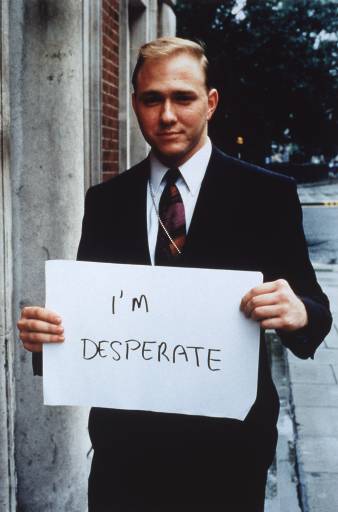
I find Wearing's working interesting as she tries to draw out thinks people do not usually reveal. This act of drawing things out is something I want to explore further, this create an element of social interaction even if its just for a moment. Wearing technique is also very simple however extremely effective, by simple asking people to write something about them and hold it up and allow her to take their picture holding up the what they wrote. Wearing says you get to a point and wonder why you are doing this until you have a break through, she says her break through in this work was when a smart man in a suit wrote 'I'm desperate'.  I think this image is really powerful, that fact the Wearing got this man to draw something out that you would not expect is extremely intriguing. Everything in this image adds to the strong juxtaposition between the man and his words, including the location he is in and the slight smile on his face and how the image is light. This detail is something I would hope to carry on in my work. I idea of people writing their own message is also something I want to explore further.


After briefly looking at Wearing works, I went and asked people to write anything on a piece of paper and let me take their picture, these are some of the out comes.

Although this out come looks aesthetically effect, and very similar to Wearing's work it was not effective in drawing out things about people, which due to more research I found out was Wearing intention of her work.

After doing some more research, a when out again and asked people to write a confection on a piece of paper and to let me take their picture. This was the out come that I created. I understood Wearing's process more. Her process was very simple she asked people to 'say what you wanted to say not what someone else wants you to say' and simple write in down and let her take their picture hold it up. This creates a moment of interaction being the artist and the participated I think this is something that interested Wearing as well, further more I would like to explore this connexion for a moment between the artist and the participant or audience.


After asking everyone to write their confection of anything they wanted on the paper, I then asked them to write a wish this brings in my ideas that I was exploring by doing Yoko Ono's style wish tree. In was interesting to see the difference between how people acted when I asked the to write a confection and how they acted when I asked them to write a wish. Most people seemed to be more comfortable to write a wish and seemed to pose more for the picture then when I asked them to write a confection, and the confection they all stood very tall and smiled less. Unlike my first attended I wanted to keep the back ground more simple as this would lead to more focus on what is written on the paper and the expecting on peoples faces.

At the time of Wearing doing this piece 'say what you want to say not what someone else wants you to say' it was a time of heavy ruling, Margaret Thatcher had enforces harsh laws about people, and changed peoples life's debated for the worse. I think Wearing was trying to break free of this by creating this piece, and wanted people to think about what they truly wanted to say and express how they truly felt. I think Wearing was extremely effective in achieving this. There was a lot of things wrong with the country at the time and I believe Wearing want to create that moment of social interaction almost to pause everything which was going on around them and context with people again. I think Wearing's work is extremely powerful due to its simplicity, this is what excites me about her as an artist.


http://www.tate.org.uk/art/artworks/wearing-im-desperate-p78348

Another piece of Wearing's work which I found interesting was the way she informs people about her work. Wearing adverts her work in loads of different ways, such as tiny little notes in obscure newspaper, along side big posters and word of mouth, this is something that I would try and create in my work. Wearing pacifically did this in 'Self Made'


Trailer for Self Made


Wednesday, 24 April 2013

Yoko Ono Wishes

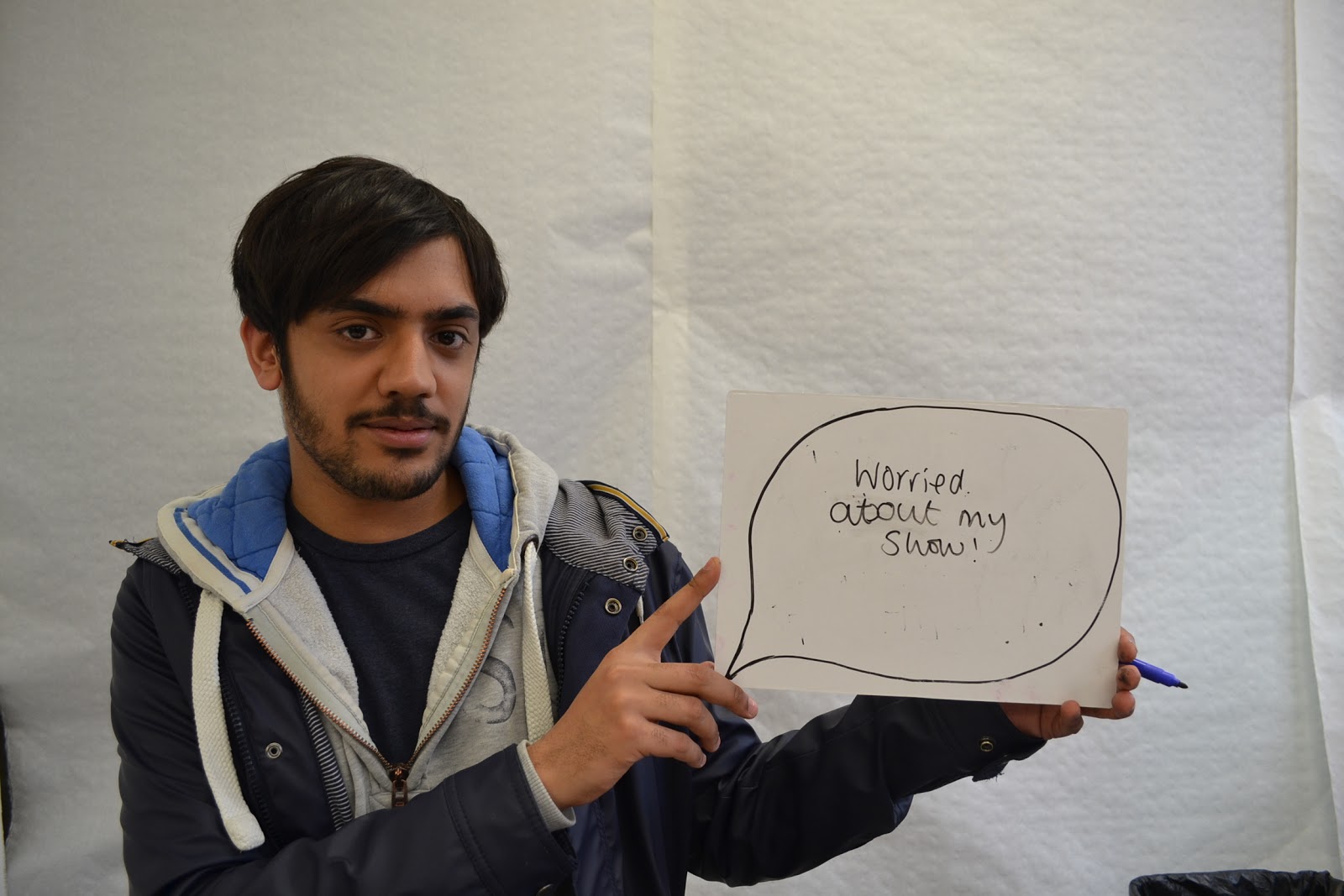
After doing my Roy Lichtenstein response I found the technique of doing around my local area with a board and asking people to write everious things very effective. Therefore I through I would be interesting to see what people wrote if I walked around and asked people to write their wishes in a bubble. It was interesting how people took a lot longer to think about what they wished for than what they thought (Lichtenstein Response) I also found it interesting the diffecne between the wishes people wrote on the wish tree and the wishes that the wrote in the bubble. It seemed that people wishes for a lot bigger things when they knew they were getting their picture taken with it ('I wish for a REVELUTION') this is unlike the wishes on the wish tree ('I wish for good grades') 


After looking a Gillian Wearing, I though this outcome also reflected similar things to her work. Like Wearing I had to have a social interaction will all these people who I spoke too, this interaction between myself the artist and them was as interesting as what they wrote on the whip broad. It was interesting to see how everyone reacted so differently to being asked the same question. Also like Wearing I did not want to infurence what they wrote on the board, I wanted them to feel free to write anything they wanted to. This also links back Yoko Ono's cut piece as I as an artist did not have control over what they wrote, which is similar to Ono not having control over which piece of her dress audience members cut off. 

As a response I think this was very effective as it brought my key artist together, in a very simple and effective way. I think this idea of not being in control as an artist is the main thing I'm going to take from this and I think this something that I really want to explore strongly in my final outcome. 

Yoko Ono Wish Tree Responce

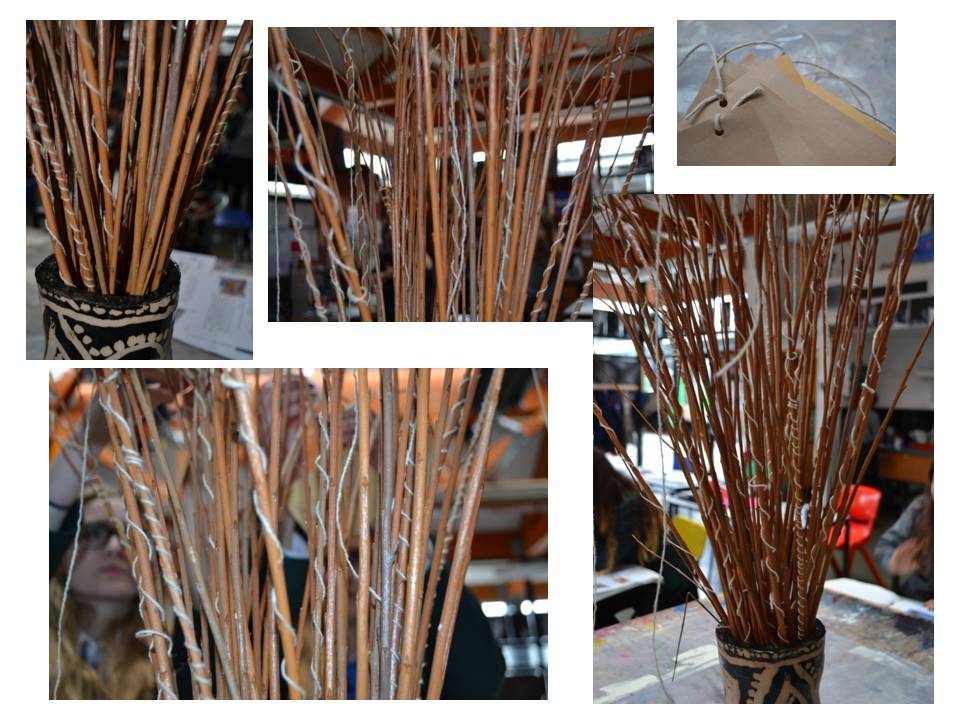
After looking and understanding Yoko Ono's ideas and thoughts behind her wish tress and how she applies them differently in different exhibitions so that they apply to their location. I decided to create a wish tree in a class room in my school and invited people to add their wishes too it.


I chose to create a tree made of willow sticks, as they went with the setting of the room and where a similar colour to colour of the wood in the room. They also looked very natural and clearly signified a tree to the group of people I asked to add wishes too. I also decide to intertwine pieces of natural string to make it look more delicate. The string also allowed the wishes to seem more part of the tree as I made them with the same string. I tried to create the tags on things what were also made of things that had very natural colours as this was they look I was going for.


I invited a group of young people to add their wishes to the tree, and then left a box of tags for people to continutly add their wishes to the tree. It was interesting to see how some people wrote their wishes straight away and other took almost an hour to think about what they truly wanted to wish for. It was also interesting to see how and where people placed their wishes and what this means about them and their wishes.


I think this outcome was successful due to the amount of wishes, and allowing people to break down barriers to revel something a bit more about themself, it also lead to people talking creating interation between each other. If I did this outcome again, I would invite more people to write on wishes and do it for a longer period of time in a more public space. I like the nautrelnes of all thr colours and how they worked together. It was intresting to see what people wrote on their wishes -especally beacuse once they have tied the wish on it was annoimuses. I think these lead people to feel more free out what they we're writing. 


Roy Lichtenstein/ Gillian Wearing Responce

After going to the Litchenstein exhibitions, I found his work looking at peoples thoughts extremely interesting. I wanted to think of a create and effective way in which I would I could capture peoples thoughts and create some sort of social interaction. However this outcome also strongly links to Gillian Wearing, who talks to people and asks them to write down and hold up things about themselves on pieces of paper.

I came up with the idea to walk around my local area and ask people to write their thoughts on a whip board with a thought bubble on.


Here are some of the responses that I had, I think the proses of people writing it down made them think what what where they thinking about. This technique was very simple, like Wearing's, but worked very effectively in completing what I set out to do. I think as an outcome this was very successful as it broke down a barrier between myself the artist and the audience, this lead to a moment of social interaction between us. It was also interesting to draw things out which you may not know from just looking at them, like Wearing does. The uses of a speech bubble was very effective was it is a universal simple and needed little explain which to do.