Wednesday, 24 April 2013

Yoko Ono Wishes

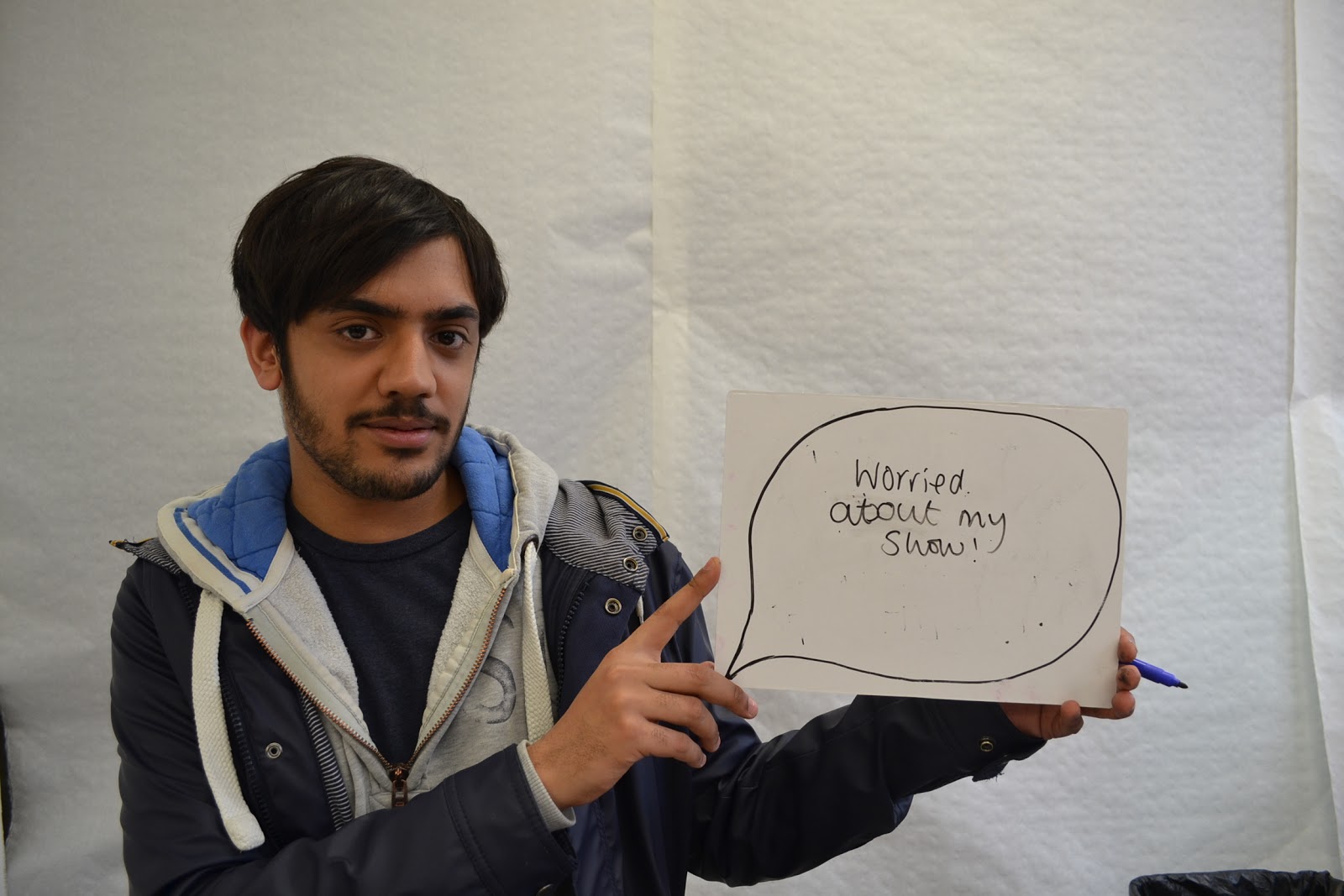
After doing my Roy Lichtenstein response I found the technique of doing around my local area with a board and asking people to write everious things very effective. Therefore I through I would be interesting to see what people wrote if I walked around and asked people to write their wishes in a bubble. It was interesting how people took a lot longer to think about what they wished for than what they thought (Lichtenstein Response) I also found it interesting the diffecne between the wishes people wrote on the wish tree and the wishes that the wrote in the bubble. It seemed that people wishes for a lot bigger things when they knew they were getting their picture taken with it ('I wish for a REVELUTION') this is unlike the wishes on the wish tree ('I wish for good grades') 


After looking a Gillian Wearing, I though this outcome also reflected similar things to her work. Like Wearing I had to have a social interaction will all these people who I spoke too, this interaction between myself the artist and them was as interesting as what they wrote on the whip broad. It was interesting to see how everyone reacted so differently to being asked the same question. Also like Wearing I did not want to infurence what they wrote on the board, I wanted them to feel free to write anything they wanted to. This also links back Yoko Ono's cut piece as I as an artist did not have control over what they wrote, which is similar to Ono not having control over which piece of her dress audience members cut off. 

As a response I think this was very effective as it brought my key artist together, in a very simple and effective way. I think this idea of not being in control as an artist is the main thing I'm going to take from this and I think this something that I really want to explore strongly in my final outcome. 

Yoko Ono Wish Tree Responce

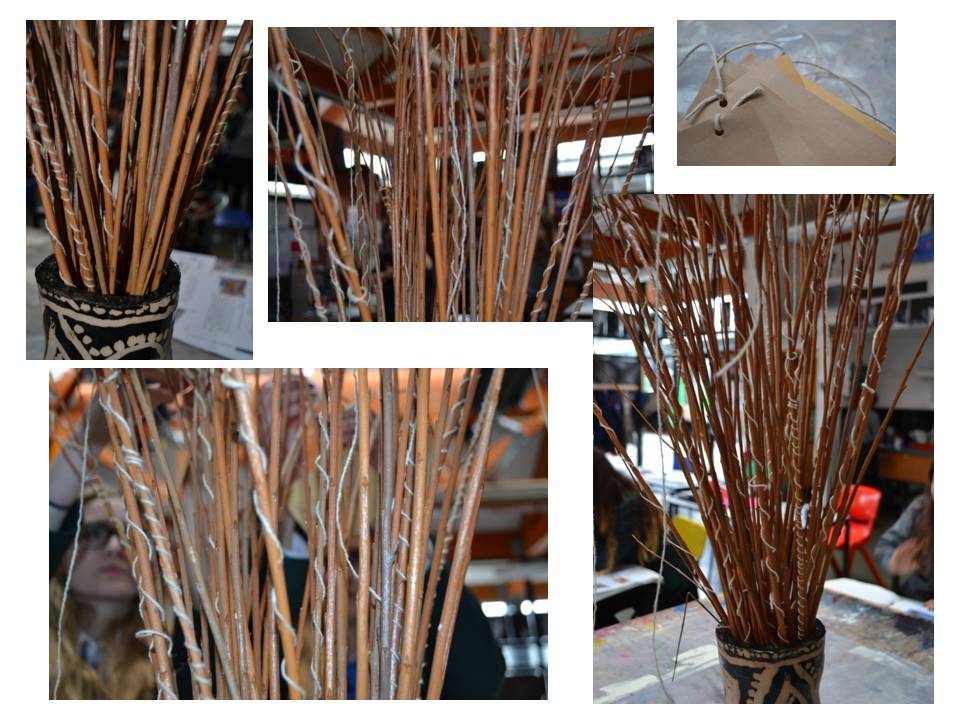
After looking and understanding Yoko Ono's ideas and thoughts behind her wish tress and how she applies them differently in different exhibitions so that they apply to their location. I decided to create a wish tree in a class room in my school and invited people to add their wishes too it.


I chose to create a tree made of willow sticks, as they went with the setting of the room and where a similar colour to colour of the wood in the room. They also looked very natural and clearly signified a tree to the group of people I asked to add wishes too. I also decide to intertwine pieces of natural string to make it look more delicate. The string also allowed the wishes to seem more part of the tree as I made them with the same string. I tried to create the tags on things what were also made of things that had very natural colours as this was they look I was going for.


I invited a group of young people to add their wishes to the tree, and then left a box of tags for people to continutly add their wishes to the tree. It was interesting to see how some people wrote their wishes straight away and other took almost an hour to think about what they truly wanted to wish for. It was also interesting to see how and where people placed their wishes and what this means about them and their wishes.


I think this outcome was successful due to the amount of wishes, and allowing people to break down barriers to revel something a bit more about themself, it also lead to people talking creating interation between each other. If I did this outcome again, I would invite more people to write on wishes and do it for a longer period of time in a more public space. I like the nautrelnes of all thr colours and how they worked together. It was intresting to see what people wrote on their wishes -especally beacuse once they have tied the wish on it was annoimuses. I think these lead people to feel more free out what they we're writing. 


Roy Lichtenstein/ Gillian Wearing Responce

After going to the Litchenstein exhibitions, I found his work looking at peoples thoughts extremely interesting. I wanted to think of a create and effective way in which I would I could capture peoples thoughts and create some sort of social interaction. However this outcome also strongly links to Gillian Wearing, who talks to people and asks them to write down and hold up things about themselves on pieces of paper.

I came up with the idea to walk around my local area and ask people to write their thoughts on a whip board with a thought bubble on.


Here are some of the responses that I had, I think the proses of people writing it down made them think what what where they thinking about. This technique was very simple, like Wearing's, but worked very effectively in completing what I set out to do. I think as an outcome this was very successful as it broke down a barrier between myself the artist and the audience, this lead to a moment of social interaction between us. It was also interesting to draw things out which you may not know from just looking at them, like Wearing does. The uses of a speech bubble was very effective was it is a universal simple and needed little explain which to do.

Tuesday, 16 April 2013

Roy Lichtenstein

Lichtenstein was a leading figure in the pop art movement, originally focusing on comic book strips then still in his same style moved on to capturing emotion and work of landscapes.

Two things interested me about Lichtenstein's work, firstly the way that he capture a moment of interaction, many of women. his pop art style and use of speech marks unlike other artist gives an incite to the people in the work. Being able to capture a moment of social interaction is something I would like to explore further. The bold pop art style makes his work extremely accessible to a wide audience. And his comic book style on capturing a moment support this accessibility. The ascetics of his pictures are clear and simple, this is why I believe so many people are fans of his work.

Also the amount of controversy that is work created lead to huge amounts of social interaction, his work got a lot of negative press this lead to split opinions and interaction between public opinion, critical opinions and what Lichtenstein was trying to create. Although this was not his intention of his work I think its extremely interesting how much interaction this work created.

After seeing his work in real life at the Tate, I was blow away by the size of his work and how sharp everything was. The precision of the dots and brightness of the colours really makes his work stand out from other artist.


Lichenstein was working a a time of great Revelation, in 1960's was a a time great freedom and the sexual revation. All forms of art were coming a lot more free, bold and powerful, I think this is clearly reflected in Lichenstein's work. However this was a time of empowering women, due to women being able to control getting pregnant for the first time due to 'the pill' it could be argued that Lichenstien's work empowers women due to them being the fores of some of his most famous piece. Alternatively it could be seen as objectifying them. Lichtenstien create an image of the idea women.

Sunday, 14 April 2013

Relational Aesthetics

"A set of artistic practices which take as their theoretical and practical point of departure the whole of human relations and their social context, rather than an independent and private space." The artist can be more accurately viewed as the "catalyst" in relational art, rather than being at the centre.

After reading and understand relational Aesthetics, I think it is defiantly something I want to explore through out my theme of social interaction. I think the idea of using the art as a catalyst is something which would be really interesting and exciting to look in further. I also think this links strongly with my ideas of doing a performance piece of work, like Yoko Ono. I would hope to use my art piece as a catalyst to break down barriers between people. I hope I can achieve this to some level in my final outcome, I think through performance art is a very effective way of doing so. I also would like my piece to be set in a social context, I think this would defiantly lead to more social interaction between people. 

Rirkrit Tiravanija

Tiravanija's work “is fundamentally about bringing people together.” 


This installation artist is most famous for a piece called pad thai  in 1990, when he through ar conventions out of the window by creating an instillation where he cooked and served food for gallery visitors.The visitors' participation in the live event was the art work, and after the visitors had gone, the remains of the meal stayed on view as evidence of the event. The food was not the art nether was the making of it, it was just a means to provoke interaction and to allow a convivial relationship between audience and artist.


Tuesday, 9 April 2013

JR

'ONE WISH TO CHANGE THE WORLD'

The french born photographer and street artist, self called "photograffeur" 

His graffiti often targeted precarious places like rooftops and subway trains, and he deeply enjoyed the adventure of going to and painting in these spaces. After finding a camera in the Paris Metro, JR and his friends began to document the act of his graffiti painting. He began wondering about the vertical limits, the walls and the facades that structure cities.

 After observing the people he met and listening to their message, JR pasted their portraits up in the streets and basements and on the roof tops of Paris. Between 2004 and 2006, JR created Portraits of a Generation, portraits of young people from the housing projects around Paris that he exhibited in huge format. This illegal project became official when the City of Paris put JR’s photos up on buildings. At the beginning of his projects, JR wanted to bring art into the street: "In the street, we reach people who never go to museums." 

In 2007, with Marco, JR put up enormous photos of Israelis and Palestinians face to face in eight Palestinian and Israeli cities on either side of the Separation Barrier. Upon his return to Paris, he pasted these portraits up in the capital. For the artist, this artistic act is first and foremost a human project: "The heroes of the project are all those who, on both sides of the wall, allowed me to paste the portraits on their houses." Israeli and Palestinian men and women who have the same jobs accepted to laugh or cry, to scream or pull faces in front of JR’s lens. The portraits created were pasted up face to face, in monumental format on either side of the Separation Wall and in several surrounding towns. 

In 2008, JR undertook an international tour for Women Are Heroes, a project in which he highlights the dignity of women who are often targets during conflicts. JR admits to not always understand but feeling and crying because of what they told him. JR chose the locations due to thinks he hear in the media which shocked him. In this project he also wanted to give people their own galleries. The project create a link between the women and the media, as the media had no clue what was going on and had to be far way to see it, however come up close and talk to the women to understand it. This all provoked curiosity. Also JR  created books to give to the community however to get one you had to get it signed by one of the women. This creates interactions between them and strength the community. 

JR talks about his inside out project and his hopes for peace and changing lives... 
http://www.ted.com/talks/jr_one_year_of_turning_the_world_inside_out.html

JR  wants to constantly challenge the perceptions which the media create about people. Whats to make things you make think impossible possible, as easily as possible. He says art can not change things but can change the way you think about this and the way you think about things can change the world. He goes on to say its, what we see changes who we are and all together we can change the world together. 

http://www.youtube.com/watch?v=0PAy1zBtTbw